5th July, 2012: With a new machine in my possession and booting both the distros in my VirtualBox, I could make a fair comparison of both the OSs. Now Gnome 3 would load for Fedora and Unity 3D for Ubuntu 12.04 LTS.

 I had the 32-bit OS of Fedora 17 and hence, though I had 64-bit of Ubuntu, but compared with the 32-bit only.
Fedora's Gnome 3 interface looks really great and on clicking the activities section you get to see an interface with the most common applications as well as an exhaustive list of apps available.
 CPU usage of Ubuntu (10%) is far lower than Fedora (44%) and RAM usage is almost identical in VB (300 MB).


Both are really smooth to operate and looks complementary to each other. Wish one day there would be a Linux OS integrating the goodness of both!
My old post:
To begin with, well it's a difficult comparison of course. And to be fair my system is P4, 1.5 GB RAM DDR. So, definitely neither Gnome 3.0, nor Unity 3D would load - it would be Gnome fallback and Unity 2D for Fedora and Ubuntu respectively.
Currently I use Debian Squeeze on daily basis and boot the other OSs from pen-drive. Both Ubuntu Precise and Fedora Beefy Miracle results are from usb booting only.
Given my system limitations, my comparison would be on Booting time and ease, CPU & RAM usage at steady state, default software bundle provided and finally performance as an user.
Distro Size:
Fedora 17 has a smaller iso file (646 MB) whereas the Ubuntu Precise has around 850 MB file. But Ubuntu has a complete LibreOffice suite provided by default whereas Fedora doesn't have any office suite, by default.
So, ISO size-wise, it's all square.
Booting time:
Fedora Beefy booted in less than 5 minutes whereas Ubuntu Precise took about 7-8 min. Both Gnome 3 and Unity 3D failed to load in my system.
For booting time, Fedora is the winner.
Note: The longish boot time is due to failure of Gnome 3 to load. Else, both boot within 30 sec. and hard to choose between the two.
Desktop Interface:
Again it depends on personal preference. I liked both and it's square one for me. Unity looks beautiful where Fedora gave me a Gnome fallback look.
Ubuntu Precise:


CPU & RAM Usage:
At steady state, from USB booting, following are the RAM and CPU usage:
Fedora: CPU 23%, RAM 237-240 MiB
Ubuntu: CPU 17-18%, RAM 340 MiB
Again it is a deadlock - Fedora uses more CPU but less RAM than Ubuntu.
For Ubuntu visit one of my previous post.
Softwares Bundled with the ISO:
Both have similar kind of software - Firefox 12.0, chat clients like Empathy, Basero, Cheese Webcam booth, Rhythmbox, shotwell, etc. Even the file managers are similar for both (Nautilus).
However, Ubuntu provides LibreOffice suite along with Thunderbird and is a clear winner here as even if you don't have an active internet connection, straight away you can start using Ubuntu for daily needs. But, to install Ubuntu, either you need a DVD or an USB - Fedora can squeeze in a CD as well. Again all square to be fair to both the distros. And these days who doesn't have an internet connection?
Fedora has more updated linux kernel - at least that is my observation. Ubuntu shows linux kernel of 3.2 whereas Fedora 17 has 3.3. Not sure which one offers better security or smoother usage though.
A list of Ubuntu bundled softwares are in this post http://mylinuxexplore.blogspot.in/2012/04/ubuntu-1204-lts-precise-pangolin-what.html.
Software Repository
Almost similar software repositories for both, covering almost all the softwares one would need. Of course, Ubuntu Software repository looks prettier! But, content-wise more or less the same set of apps that one uses daily.

 Performance
Somehow, my experience with Fedora 17 was much smoother than Ubuntu 12.04 LTS. My computer is not the most updated one and specs are minimal. But, Fedora 17 with Gnome fallback didn't make me feel so and I could multitask with ease. However, in Ubuntu 12.04 LTS, it was difficult to work with even 3-4 tabs of Firefox open.
But, Ubuntu Precise has some plus points as well. HUD effects and video lens which Fedora lacks.
However, my user experience in Fedora was better than Ubuntu.
Support
Fedora's support ends somewhere in mid-2013 and Fedora doesn't have any LTS. Ubuntu 12.04 LTS support, on the other hand, continues till 5 years. Ubuntu is a clear winner here for those users who doesn't like to tinker with their systems much.
Conclusion
Overall, as everyone will agree, both the OSs have pros & cons. My judgment is biased by the system I am using and to me Fedora looks to be a less resource hungry distro and better user experience than Ubuntu. However, if you have a modern system, Ubuntu would be a better choice as an eye-candy. Functionality-wise I didn't note any difference between the two distros. Community-wise, both have very strong support of linux users and you can find instant help. Unity looks stunning in Ubuntu and gives it a different appeal, whereas Fedora is more Gnome 3 look which you see in OpenSUSE as well. For looks, it is Ubuntu 12.04 but for efficiency, it is Fedora 17. Unity is still evolving and with every passing release, getting better. I hope by Ubuntu 13.04, the developers will get their act together and it will be an interesting comparison with Fedora 18.
10th Feb 2013:
For my latest comparison between Fedora 18 vs Ubuntu 12.10, please click here. In this article, I have compared across the desktop flavours, viz., Gnome, KDE, XFCE and LXDE between the two most famous distros in the Linux world.


Fedora's Gnome 3 interface looks really great and on clicking the activities section you get to see an interface with the most common applications as well as an exhaustive list of apps available.

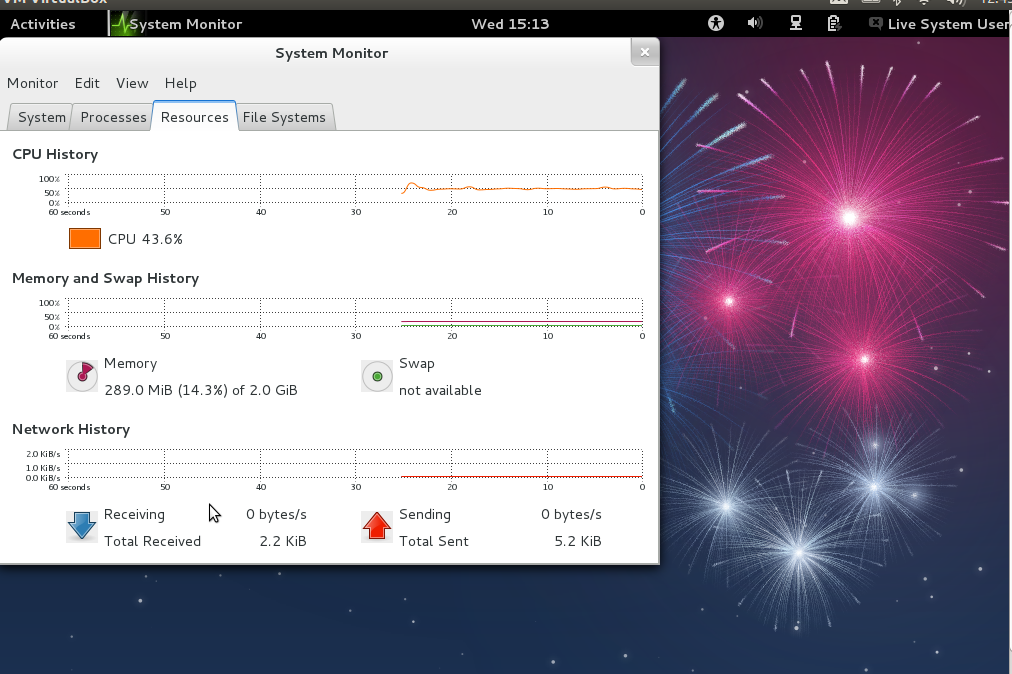

Both are really smooth to operate and looks complementary to each other. Wish one day there would be a Linux OS integrating the goodness of both!
My old post:
To begin with, well it's a difficult comparison of course. And to be fair my system is P4, 1.5 GB RAM DDR. So, definitely neither Gnome 3.0, nor Unity 3D would load - it would be Gnome fallback and Unity 2D for Fedora and Ubuntu respectively.
Currently I use Debian Squeeze on daily basis and boot the other OSs from pen-drive. Both Ubuntu Precise and Fedora Beefy Miracle results are from usb booting only.
Given my system limitations, my comparison would be on Booting time and ease, CPU & RAM usage at steady state, default software bundle provided and finally performance as an user.
Distro Size:
Fedora 17 has a smaller iso file (646 MB) whereas the Ubuntu Precise has around 850 MB file. But Ubuntu has a complete LibreOffice suite provided by default whereas Fedora doesn't have any office suite, by default.
So, ISO size-wise, it's all square.
Booting time:
Fedora Beefy booted in less than 5 minutes whereas Ubuntu Precise took about 7-8 min. Both Gnome 3 and Unity 3D failed to load in my system.
For booting time, Fedora is the winner.
Note: The longish boot time is due to failure of Gnome 3 to load. Else, both boot within 30 sec. and hard to choose between the two.
Desktop Interface:
Again it depends on personal preference. I liked both and it's square one for me. Unity looks beautiful where Fedora gave me a Gnome fallback look.
Ubuntu Precise:

Fedora Beefy:

At steady state, from USB booting, following are the RAM and CPU usage:
Fedora: CPU 23%, RAM 237-240 MiB
Ubuntu: CPU 17-18%, RAM 340 MiB
Again it is a deadlock - Fedora uses more CPU but less RAM than Ubuntu.
For Ubuntu visit one of my previous post.
Softwares Bundled with the ISO:
Both have similar kind of software - Firefox 12.0, chat clients like Empathy, Basero, Cheese Webcam booth, Rhythmbox, shotwell, etc. Even the file managers are similar for both (Nautilus).
However, Ubuntu provides LibreOffice suite along with Thunderbird and is a clear winner here as even if you don't have an active internet connection, straight away you can start using Ubuntu for daily needs. But, to install Ubuntu, either you need a DVD or an USB - Fedora can squeeze in a CD as well. Again all square to be fair to both the distros. And these days who doesn't have an internet connection?
Fedora has more updated linux kernel - at least that is my observation. Ubuntu shows linux kernel of 3.2 whereas Fedora 17 has 3.3. Not sure which one offers better security or smoother usage though.
A list of Ubuntu bundled softwares are in this post http://mylinuxexplore.blogspot.in/2012/04/ubuntu-1204-lts-precise-pangolin-what.html.
Software Repository
Almost similar software repositories for both, covering almost all the softwares one would need. Of course, Ubuntu Software repository looks prettier! But, content-wise more or less the same set of apps that one uses daily.

Somehow, my experience with Fedora 17 was much smoother than Ubuntu 12.04 LTS. My computer is not the most updated one and specs are minimal. But, Fedora 17 with Gnome fallback didn't make me feel so and I could multitask with ease. However, in Ubuntu 12.04 LTS, it was difficult to work with even 3-4 tabs of Firefox open.
But, Ubuntu Precise has some plus points as well. HUD effects and video lens which Fedora lacks.
However, my user experience in Fedora was better than Ubuntu.
Support
Fedora's support ends somewhere in mid-2013 and Fedora doesn't have any LTS. Ubuntu 12.04 LTS support, on the other hand, continues till 5 years. Ubuntu is a clear winner here for those users who doesn't like to tinker with their systems much.
Conclusion
Overall, as everyone will agree, both the OSs have pros & cons. My judgment is biased by the system I am using and to me Fedora looks to be a less resource hungry distro and better user experience than Ubuntu. However, if you have a modern system, Ubuntu would be a better choice as an eye-candy. Functionality-wise I didn't note any difference between the two distros. Community-wise, both have very strong support of linux users and you can find instant help. Unity looks stunning in Ubuntu and gives it a different appeal, whereas Fedora is more Gnome 3 look which you see in OpenSUSE as well. For looks, it is Ubuntu 12.04 but for efficiency, it is Fedora 17. Unity is still evolving and with every passing release, getting better. I hope by Ubuntu 13.04, the developers will get their act together and it will be an interesting comparison with Fedora 18.
10th Feb 2013:
For my latest comparison between Fedora 18 vs Ubuntu 12.10, please click here. In this article, I have compared across the desktop flavours, viz., Gnome, KDE, XFCE and LXDE between the two most famous distros in the Linux world.
Read more!
